Cognitive stimulation: training attention, memory and planning
Thanks to neuroplasticity, a child’s brain can build new pathways. This therapy exercises them in a planned, fun way.
How we help
Cognitive functions—attention, memory, executive function, language, perception and processing speed—are the tools children learn with. When one is weaker, everything else is harder. Cognitive stimulation trains them with graded tasks that level up as the child progresses.
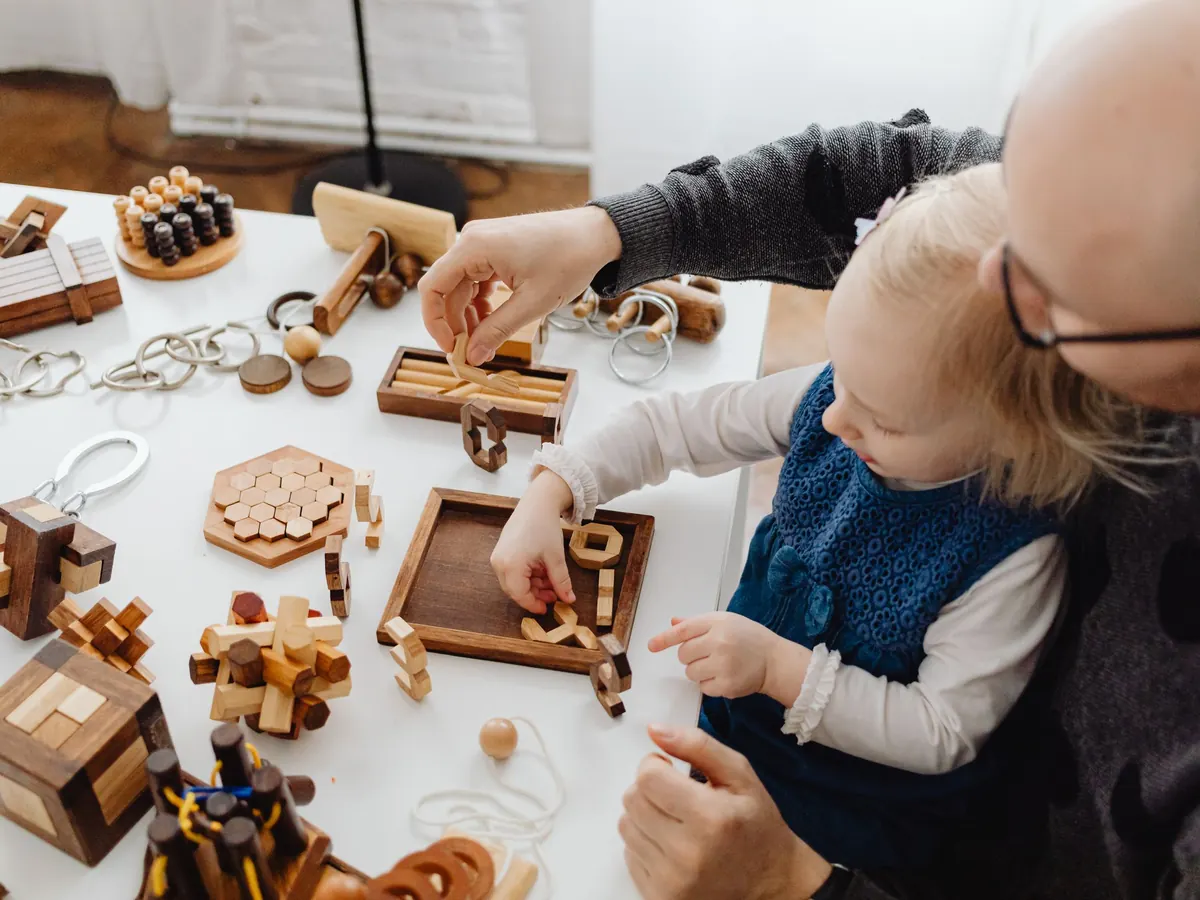
It is the heart of our mission: stimulating new cognitive pathways that boost learning skills through neuroplasticity. We use board games, hands-on materials, paper exercises and movement activities, with measurable goals.
It can help if your child…
- Children who are easily distracted
- Frequently forgetting instructions or materials
- Trouble planning, organizing or finishing tasks
- Slow information processing
- Children with ADHD or learning difficulties
How we work
Cognitive profile
We start from the evaluation to know which functions to strengthen.
A graded program
Exercises that get harder as the child improves.
Transfer to real life
We carry the skills over to homework, backpacks and daily routines.
Follow-up
We measure progress and adjust the program with the family.
Child neuropsychologist in Tijuana
Neuropsychology studies the link between the brain and behavior: how a child pays attention, remembers, organizes, talks and learns.
Read the guideCommon questions
What is neuroplasticity?
It is the brain’s ability to change and build new connections through practice. It is especially high in childhood, which is why early stimulation pays off.
Does it help children with ADHD?
Yes, as part of a comprehensive plan. It trains attention and executive function, combined with behavioral therapy and parent and teacher guidance.
Do you use screens?
Very little. We prefer hands-on materials and guided play, which also builds interaction.
You may also be interested in
Speech and language therapy
Our speech-language therapists work on speech, language and learning difficulties so every child can express…
Learn more
Occupational therapy
Getting dressed, eating, holding a pencil, coping with noise or textures, playing with others: occupational therapy…
Learn more
Behavioral therapy
Difficult behavior almost always communicates something. We find what triggers it and teach the child—and the adults…
Learn moreBook an assessment or a visit
Call us, send a WhatsApp message or leave your details: we’ll get back to you to book and answer your questions.
- Phone+52 (664) 210 3920
- WhatsApp · therapy(664) 483 7061
- WhatsApp · school(664) 822 1110